The High Ground
Pedralbes occupies the high ground above Sarrià — a neighbourhood of wide avenues, detached villas, and an atmosphere of deliberate privacy. Developed in the early twentieth century as Barcelona's most exclusive residential district, it has maintained that character with remarkable consistency across a century of urban change. The streets are quiet. The properties are large. The walls are high.
The neighbourhood takes its name from 'pedra alba' — white stone — a reference to the limestone deposits of the hillside on which it sits. The streets were designed for a different mode of living than the city below: wider than necessary, properties set back from the pavement, trees that have had a century to grow. The Avinguda de Pedralbes, the neighbourhood's central axis, is lined with plane trees of considerable age and flanked by villas whose gardens are largely invisible from the street. This is not an accident of planning. It is a deliberate arrangement of space that prioritises privacy over proximity.
The Monastery and the Palace
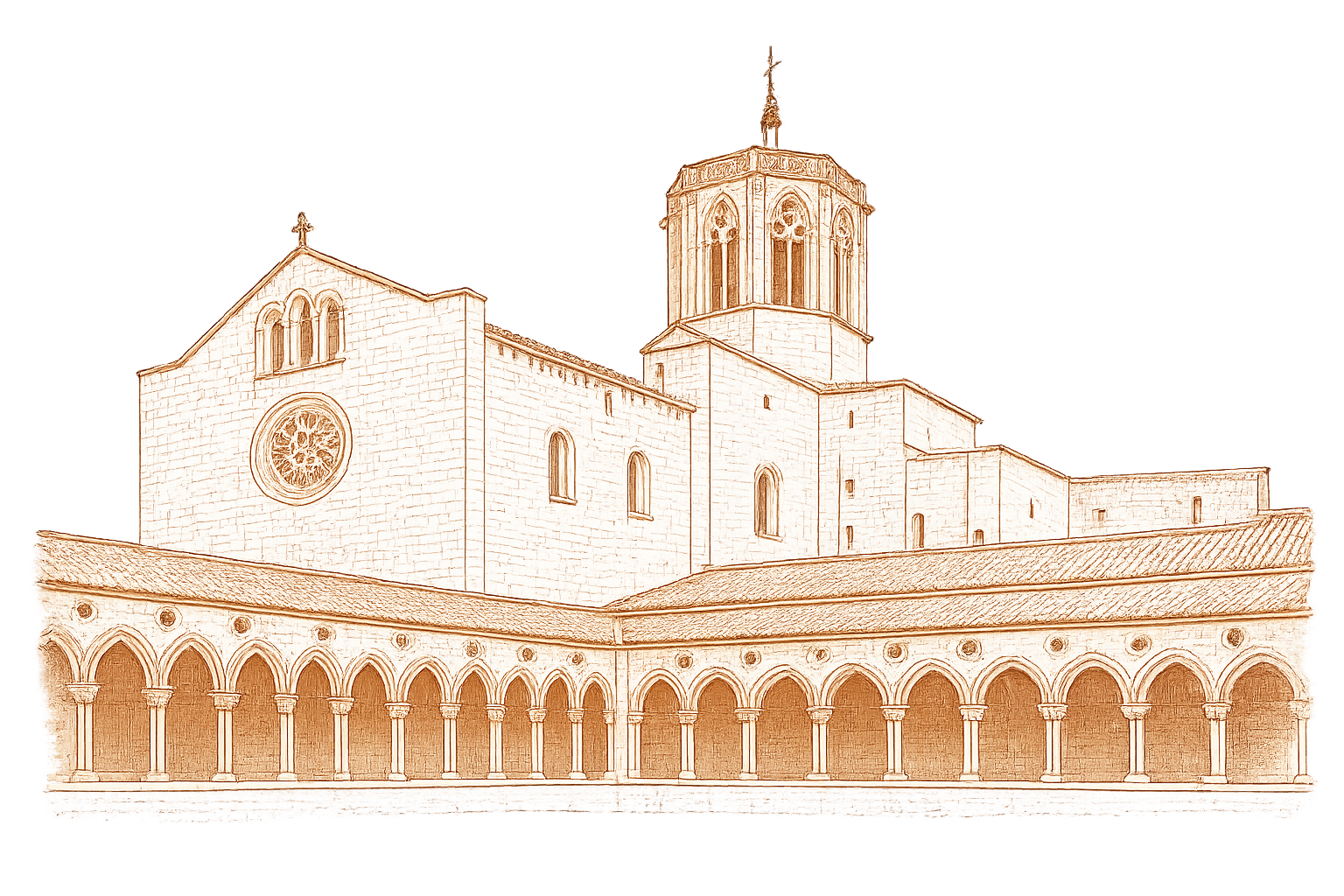
The Monestir de Pedralbes is the neighbourhood's anchor, and it deserves to be taken seriously as architecture rather than merely acknowledged as a landmark. Founded in 1326 by Queen Elisenda de Montcada on the site she selected herself on the hillside above the city, and built with remarkable speed for a Gothic structure of its complexity, it is a masterwork of Catalan Gothic. Its three-storey cloister — built around a central garden of cypress trees and a Gothic fountain — is one of the most beautifully proportioned enclosed spaces in Barcelona. The Capella de Sant Miquel contains a cycle of frescoes by Ferrer Bassa painted in 1346, among the most significant medieval paintings in Catalonia. The museum within the monastery is serious, genuinely interesting, and reliably uncrowded.
The Palau Reial de Pedralbes, at the foot of the neighbourhood on Avinguda Diagonal, is a neoclassical palace built for Alfonso XIII and surrounded by gardens open to the public — formal Italianate grounds with a pergola attributed to Gaudí. On a weekday morning, the gardens are nearly empty and the contrast between their public luxury and the private character of the surrounding streets is one of the neighbourhood's defining ironies.
Daily Life
Daily life in Pedralbes is organised differently from the rest of Barcelona. The commercial infrastructure is minimal by design — a small cluster of services at the northern end of Avinguda de Pedralbes, nothing more. For anything substantial, residents travel to Sarrià or descend to the city. This relative self-sufficiency is not a limitation for the buyers who choose Pedralbes; it is a feature. The neighbourhood does not suit someone whose daily rhythm depends on walking out of the front door and into a network of shops, bars, and restaurants. It suits someone who has decided that the quality of arrival — coming home to a neighbourhood that feels like a different city — is worth the deliberate separation from the rest of it.
The Property Market
Property is defined by scarcity. Villas — detached or semi-detached houses with private gardens — come to market rarely and trade at values that reflect their genuinely unusual position in the Barcelona market. The apartment stock consists primarily of buildings from the mid-twentieth century — less architecturally distinguished than the Eixample's grand finca regia buildings, but spacious, well-proportioned, and frequently with terraces and views that are exceptional.
What Pedralbes offers that is genuinely rare in Barcelona is space — for villas with gardens, properties with private parking, apartments with terraces large enough to be useful, and the particular pleasure of a building whose next-door neighbour is not audible through the wall. The trade-off is distance from the city centre. Pedralbes is not walkable to the Eixample or the waterfront, and that matters in daily life. For buyers who prioritise privacy, quiet, and the space that the rest of the city does not provide, Pedralbes is without rival.