The Grid and the Idea
The Eixample Dreta is the neighbourhood that defines the Barcelona most people imagine when they close their eyes and picture the city. The wide, tree-lined streets. The chamfered corners. The ornate stone facades. The pharmacies and patisseries and the particular quality of afternoon light on a broad avenue. It is the physical expression of Ildefons Cerdà's 1859 plan for the city's expansion — a grid of blocks designed around the radical idea that every resident, regardless of income, deserved access to light, air, and green space. The original plan was not fully realised. The interior gardens were built over, the commercial uses multiplied beyond what Cerdà intended, and the social mix he envisaged was replaced by a concentration of wealth that would have surprised him. But the bones of the plan remain, and they are extraordinary.
The Architecture
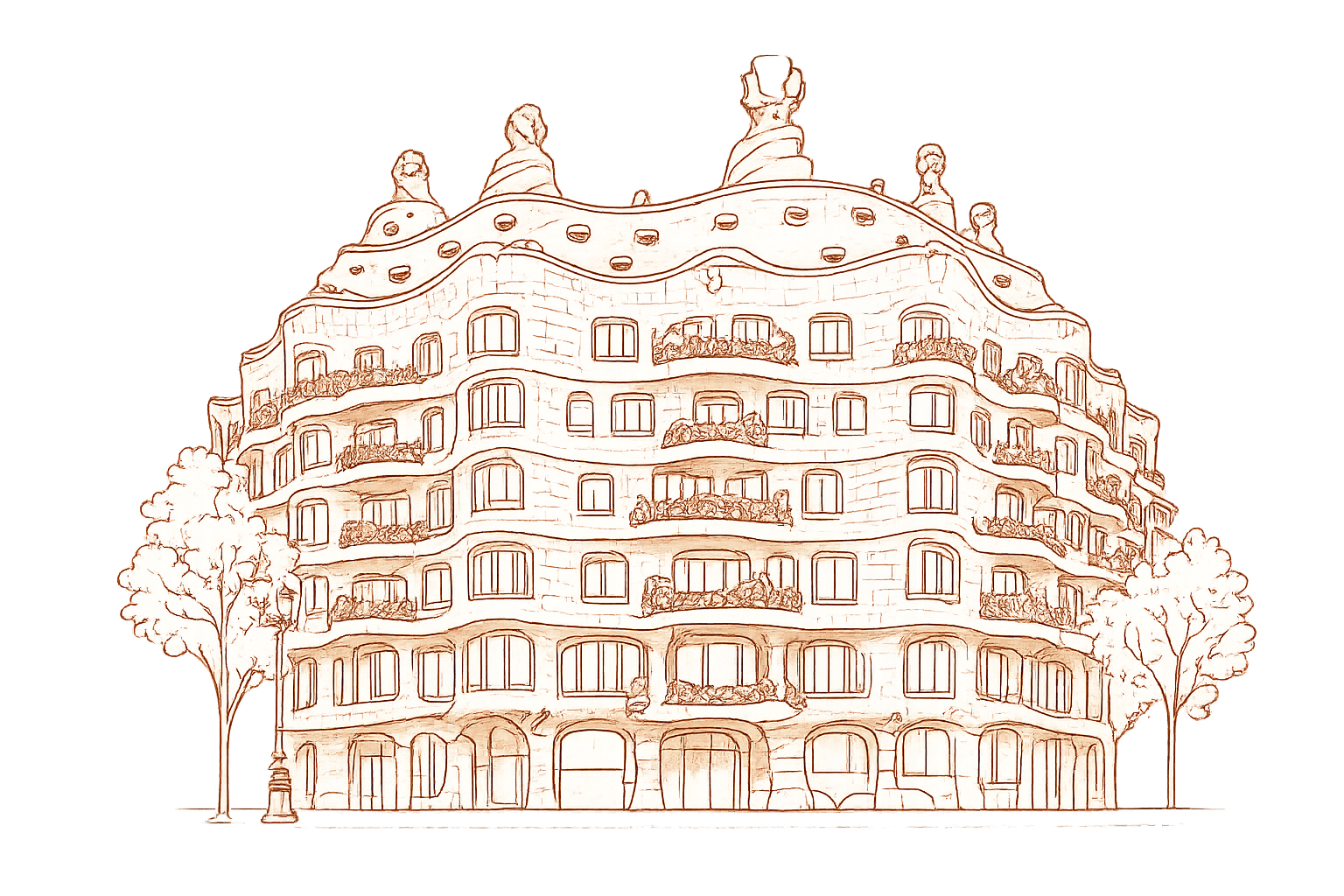
The Manzana de la Discordia — the block of Passeig de Gràcia between Carrer d'Aragó and Carrer del Consell de Cent — contains three of the most significant Modernista buildings in the world within a single city block: Casa Lleó Morera by Domènech i Montaner, Casa Amatller by Puig i Cadafalch, and Casa Batlló by Antoni Gaudí. Each is a complete statement of a different architectural personality. Gaudí's Casa Milà — La Pedrera — is four blocks north. These are not tourist attractions that happen to be in the neighbourhood. They are buildings that define what the neighbourhood is.
The property stock reflects the neighbourhood's history. The dominant building type is the finca regia — a grand apartment building from the late nineteenth or early twentieth century, typically six or seven storeys, with a formal entrance hall, high ceilings, ornamental plasterwork, and apartments of generous proportions that were designed for a bourgeoisie that expected space. The best of these buildings have been carefully maintained; others have been divided, converted, or allowed to deteriorate in ways that require attention. The quality of individual apartments within the same building can vary significantly depending on floor, orientation, and the history of interventions.
Daily Life
The neighbourhood's commercial life is dense and varied. Passeig de Gràcia is the luxury retail axis — the brands that occupy it are the brands that occupy the equivalent streets in Paris, Milan, and London. The streets behind it are more interesting: Carrer d'Enric Granados, pedestrianised and lined with restaurants and design shops, is one of the most pleasant streets in the city. The Mercat de la Concepció on Carrer d'Aragó is a genuine neighbourhood market, not a tourist destination. The density of good restaurants — serious Catalan cooking, Japanese, contemporary European — is higher here than anywhere else in the city.
Heritage and Renovation
Heritage protection is the defining constraint for buyers considering renovation. A significant proportion of the Eixample's building stock is protected under Catalan heritage law, and the implications for renovation work are substantial. Structural modifications to facades, alterations to protected interior elements, and changes to rooflines all require specific licences from the Ajuntament's heritage department. The process is navigable but demands expertise — an architect with specific experience in protected buildings, a clear understanding of what the regulations permit, and patience with a process that does not move quickly. Buyers who approach this without preparation consistently underestimate both the time and the cost. The Eixample apartment that appears straightforward to renovate frequently is not.
The Property Market
The neighbourhood's position in the Barcelona market is stable in a way that few others are. It is the address that buyers from outside the city recognise, the address that retains value through cycles, and the address that defines Barcelona's international identity. For buyers who want certainty of quality and certainty of liquidity, the Eixample Dreta delivers both. The premium it commands over comparable space in Eixample Esquerra or Gràcia is real and consistent, and it reflects something genuine about the neighbourhood's position rather than merely its reputation.